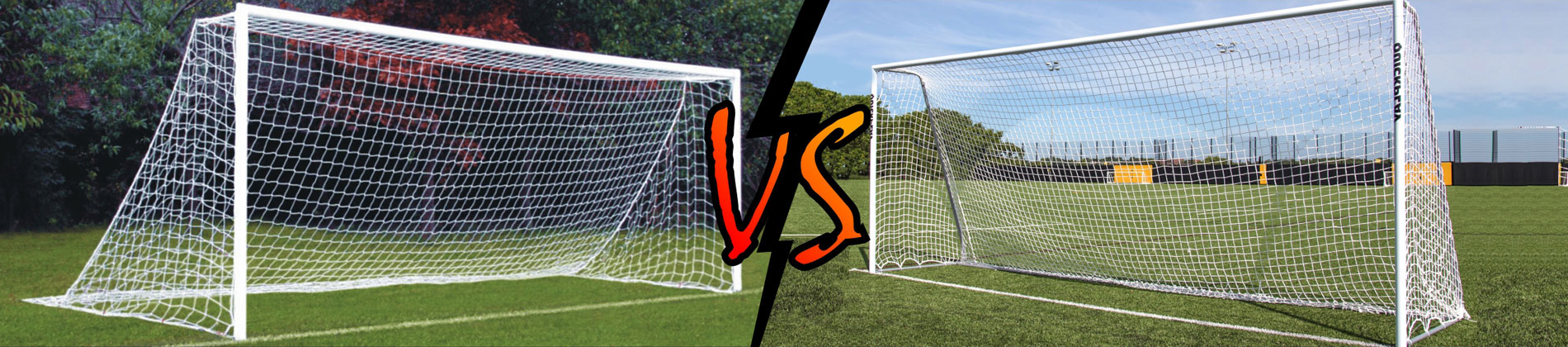
Not sure which goal is right for you? Then check out our aluminum vs steel soccer goals guide to help you understand the differences between the two.
Want to buy a new soccer goal but not sure what the difference is between an aluminum goal and a steel soccer goal? We’ve provided a handy guide to help you make the right decision and find the perfect goal for your needs.
Steel and aluminum are both great materials to make soccer goals out of. Steel goals tend to be more durable, but they are liable to rust if exposed to the elements, whereas aluminum is completely rust-proof, meaning your goals can be left out in the rain for years without any danger of rusting.
It is important to consider the weight of the soccer goals you intend to buy. Aluminum goals are typically lighter than their steel counterparts, making them easier to set up and move about if necessary.
If portability is important to you, then you will most likely want an aluminum goal as they are lighter and more portable. Steel goals are much less portable due to their weight.
If you intend to leave your goals out in the elements, then you need to consider how weather-resistant they are. Aluminum is typically more resistant to the weather as it doesn’t rust. However, some steel goals are coated to protect them from the rain and make them more weather-resistant.
The level of maintenance required for the goals comes back to the rusting issue. Steel goals may require regular painting to prevent rust, whereas the aluminum goals will not require this.
As the aluminum goals come out better in nearly every aspect than the steel goals, it comes as no surprise that aluminum goals are more expensive. It’s important to keep in mind that the aluminum goals may last considerably longer, making this extra cost worthwhile.
Some aluminum goals come with weighted bases to make sure they don’t move around during gameplay. Steel goals do not require weighted bases as the weight of the material is enough to keep the goals stationary.
If you need to move the goals about, then portability is important. While steel goals are not very portable due to their weight, some models come with wheels so that you can move them around more easily. Aluminum goals are usually light enough that they can be moved more easily.
Both steel and aluminum goals come in a variety of different sizes to suit any game requirements. While steel goals are normally a traditional goal shape with right-angle corners, aluminum goals can come in a greater variety of shapes with some target goals having rounded corners.
This depends more on the size and type of goal rather than the material, so it is important to check the setup instructions of the specific goals before you buy them to make sure you will be able to assemble them without too much difficulty.
It is important to think about who is going to be using the goals and in what situation. Steel goals are more often used for official games due to their increased durability, whereas aluminum goals are often used for practice sessions and junior games as they are more portable and last longer.
Think about what the playing surface of the intended pitch will be. Some goals will be more appropriate for certain pitches than others, and some goals may not be able to be installed on pitches such as Astroturf or indoors.
If you intend to move the goals and not leave them in situ, then you need to think about how to transport the goals and how they will be stored. In general, the aluminum goals are much easier to move and also easier to store. Some goals, such as the PRO ALU Match Goal Range from QUICKPLAY, have innovative folding designs making them great for storing away in confined spaces.
When comparing Aluminum vs Steel Soccer Goals it is important to consider all of the factors above to make sure you purchase the correct goal for your needs.
A: Steel goals tend to be more durable, but they can rust if exposed to the elements. On the other hand, aluminum is rust-proof and can withstand rain and moisture.
A: Yes, aluminum goals are generally more expensive than steel goals. However, their longer lifespan can make the extra cost worthwhile in the long run.
A: Most Steel goals are not be suitable for pitches like Astroturf or indoor surfaces due to their weight and potential for causing damage. Consider aluminum goals for such playing surfaces.
Soccer is loved and played by millions of players worldwide but whether it’s a friendly match with friends or a competitive league game it’s crucial to prioritize safety. In this guide we will explore essential soccer net safety tips that will help ensure a safe and enjoyable experience for players, coaches, and spectators alike.
Soccer nets are a fundamental part of the game but they can also pose risks if not handled properly. Follow these soccer net safety tips to mitigate potential hazards:
Properly anchoring soccer nets is essential to prevent tip-overs which can lead to serious injuries. Ensure the net is secured to the ground using suitable anchors or weights that can withstand strong winds and player impacts.
Inspect soccer nets regularly for signs of wear and tear. Look for frayed or torn netting, loose parts, and damaged frames. Create an inspection checklist to cover all crucial elements and promptly repair any issues to maintain safety standards.
Keep the net appropriately tensioned to prevent sagging. A loose net not only affects the game’s quality but also increases the chances of entanglement or injury. Adjust the tension regularly to maintain the net’s shape and safety.
Its important to buy your soccer nets from reputable dealers to make sure you dont end up with a dangerouse copy
When setting up the goals ensure that there is a safe distance between the soccer net and other obstacles like walls, fences, or bleachers. This clearance area reduces the risk of players colliding with these structures during intense gameplay.
Assign responsible adults or coaches to supervise games, especially when children are involved. Proper supervision can prevent reckless behavior and promote adherence to safety protocols.
Educate players, coaches, and parents about the importance of soccer net safety. Encourage them to follow safety guidelines and communicate any potential hazards they observe during gameplay.
Players should remove all jewelry, including necklaces, bracelets, and earrings before stepping onto the field. These items can cause injuries to both the wearer and other players during physical contact.
Strictly prohibit climbing on soccer nets. Climbing can lead to instability and cause the net to tip over, endangering players in the vicinity. It can also warp and damage the goal making it unusable.
When transporting or storing goalposts, disassemble them properly to avoid injuries and store them in a safe location away from playing areas.
Be mindful of weather conditions before and during games. In the case of severe weather such as lightning or strong winds, prioritize the safety of players and promptly suspend the match if necessary.
Have a well-equipped first aid kit readily available on the field. In case of injuries immediate access to medical supplies can make a significant difference in the outcome.
Encourage players to celebrate goals and victories responsibly. Excessive celebrations or dangerous acrobatics can lead to accidents and injuries.
Ensure players stay hydrated and take regular rest breaks during matches and practices. Proper hydration and rest are vital for preventing heat-related illnesses and fatigue.
Teach players to respect soccer equipment, including nets. Mishandling or mistreating the equipment can lead to avoidable accidents.
Have a well-defined emergency action plan in place. All players, coaches, and staff should be aware of the plan’s details to respond quickly and effectively to any critical situations.
Enforce the use of appropriate safety gear, such as shin guards. Protective gear can significantly reduce the risk of injuries during matches.
Promote fair play and sportsmanship among players. Discourage aggressive behavior and emphasize the importance of mutual respect during games.
Keep the playing surfaces in good condition. Regularly inspect and maintain the field to reduce the risk of slips, trips and other accidents.
Provide goalkeepers with specific safety training. They are prone to unique risks due to their position so proper training can help prevent injuries.
Encourage players to practice proper soccer techniques to minimize the risk of injuries to themselves and others.
Perform a risk assessment of playing areas regularly to identify potential hazards and take appropriate measures to address them.
Involve parents in promoting soccer net safety. Educate them about safety guidelines and encourage them to advocate for safety measures.
When it comes to playing soccer, having the right net size can make all the difference. Whether you’re playing competitive matches or just having some fun in your backyard, choosing the appropriate net size is crucial. In this guide we will discuss all the different soccer net sizes, providing you with valuable insights ensuring you make an informed decision. Let’s explore the various net sizes available and find the perfect fit for your soccer space.
Before we look at the different net sizes, let’s first understand why choosing the right size matters. Soccer nets come in various different sizes and each size serves a specific purpose. Whether you’re a professional player or simply just love having
a kick around, having the appropriate size net ensures fairness, safety, and a more enjoyable soccer experience.
For professional and official adult matches, the standard net size that must be adhered to is 24′ x 8′ with a depth of 8′. These measurements are regulated by soccer governing bodies to maintain consistency across all professional games.
It may not be appropriate for youth players to use a full size net as it could be too large for their skill level and physical abilities. Youth soccer net sizes are generally smaller with dimensions ranging from 18 to 21 feet in width and 6 to 7 feet in height. These smaller nets allow young players to practice effectively and build confidence in their game.
For soccer enthusiasts playing in their backyard or recreational areas, a compact net size is often preferred. Backyard soccer nets are typically smaller than official sizes making them easy to set up and store. They usually measure around 12 to 16 feet in width and 4 to 6 feet in height, providing a fun and challenging experience for players of all ages.
If you’re always on the go or need a net for temporary use or training then portable soccer nets are the ideal choice. These nets are designed for easy transportation and quick setup. Portable net sizes can vary from around 6 to 8 feet in width and 4 to 6 feet in height, offering convenience without compromising on quality.
Indoor soccer is gaining popularity, and specific net sizes are designed to fit indoor fields. Indoor soccer nets are similar to standard sizes but may be slightly smaller to accommodate the limited space. They typically measure 20 to 22 feet in width and 7 to 8 feet in height.
Selecting the right soccer net size involves considering various factors:
Safety should always be a top priority when using soccer nets. Make sure the net is securely anchored to prevent accidents during intense gameplay. Additionally, for official matches, always check that the net size complies with the regulations set by the governing bodies.
When purchasing soccer nets, you have several options. We have written a blog post about where to buy soccer nets.
Choosing the right soccer net size is crucial to ensure a safe, enjoyable, and fair game. Consider the age group, skill level, purpose, and field size when making your decision. Whether you need a standard net for official matches or a compact one for your backyard, there are various options to cater to your soccer needs. Remember to prioritize safety and compliance with regulations for the best playing experience. Now, armed with this comprehensive guide, you can confidently find the perfect soccer net size for your field or backyard.
Having the right equipment is crucial for maximizing your performance during training sessions and games whatever standard player you are. Check out these essential soccer net accessories and explore the various bits of kit that can help you become a more skilled player.
Let’s dive into the world of soccer net accessories and discover the essential items that every player should consider adding to their gear collection. These accessories are often sold at the same place you would buy your soccer net.
Transform your soccer net or rebounder into an interactive training tool with a Blazepod. These awesome gadgets attach to your equipment and track your achievements, providing invaluable feedback and analytics about your game, allowing you to accelerate your training and improve your game.
The last thing you want when you’re practicing your shooting skills is for the net to be moving about. Goal anchors are the perfect solution to keep your soccer net securely in place. These are also referred to as “soccer goal anchors” or “goal net stabilizers” and “net pegs.” They are designed to be durable and easy to use, providing stability and preventing your net from shifting during intense training sessions.
A good soccer player needs to be adept at controlling the ball, and rebounders are excellent tools for honing this skill. Mainly called a “soccer rebounder”, they can also be referred to as a “ball control trainer.” These accessories consist of a net attached to a frame that bounces the ball back to you after you kick it. This allows you to practice various drills, improve your first touch, and enhance your passing accuracy.
As a soccer enthusiast, you probably have multiple soccer balls for training. A soccer ball bag is a convenient accessory that helps you keep your balls together and easily transport them to the field. Some of these ball bags also double up as target nets.
Training cones are versatile accessories used by players of all skill levels to improve their agility, dribbling, and footwork. Soccer training cones or agility markers as they are sometimes called are colorful cones can be set up in various patterns for challenging drills and are essential for any serious soccer training routine.
Safety should be a priority for every soccer player, and wearing shin guards is a vital precaution against potential injuries. Soccer shin guards / leg protectors are available in different sizes from many retailers.
For players aiming to enhance their agility and speed, soccer training poles are indispensable, use them to create slaloms and training gates for training routines. Some of them can also be combined to create hurdles.
Playing soccer can get intense, and shots on goal might cause the net to move or come loose. Soccer net clips / net fasteners come to the rescue by keeping the net securely attached to the goalposts, ensuring uninterrupted play.
If you’re a goalkeeper or aspire to be one, investing in a quality pair of goalkeeper gloves is essential. These gloves or “keeper mitts” provide superior grip and protection, allowing you to make impressive saves and improve your overall performance.
A flat soccer ball can quickly ruin a game or training session. A soccer ball pump, or “air pump,” is a small yet indispensable accessory that ensures your soccer balls are always properly inflated and ready for action.
Soccer training mannequins are excellent tools for players who want to improve their free-kick techniques. Use soccer training mannequins or “free-kick dummies” to create defensive walls to practice shooting around and help you perfect your striking skills.
For players aiming to increase their foot speed and agility, a speed ladder is a valuable training tool. footwork ladders allow you to create training regimes that focus on a player’s footwork and precision taking their quickness on the field to the next level.
For players looking to enhance their shooting accuracy, soccer net target sheets are a fantastic addition to their training arsenal. Soccer target sheets improve goal shooting accuracy and add an extra level of enjoyment to training.
When it comes to playing soccer, having a reliable and durable soccer net is essential. Whether you’re a professional athlete or a soccer enthusiast, finding the best places to buy soccer nets can greatly impact your game experience. With so many options available online and offline, it can be overwhelming to choose the right one. That’s why we’ve curated this comprehensive guide to help you find the top places to buy soccer nets. In this article, we’ll cover the best online stores, physical retailers, and other factors to consider when purchasing a soccer net.
When searching for the best places to buy soccer nets, it’s important to consider factors such as quality, price, customer reviews, and shipping options. You have two main options:
Direct Purchase from the Manufacturer: One option is to go directly to the manufacturer, such as QUICKPLAY. The advantage of this approach is that, in case of any difficulties, you can directly communicate with the manufacturer, who possesses comprehensive knowledge about their product. This direct contact can lead to quicker problem-solving without the need for intermediaries, which may result in extended delays.
Marketplaces and Resellers: Another option is to buy soccer net from a marketplace or reseller like Amazon. While this may offer convenience and a wide selection of products, it’s important to note that in case of issues, the reseller may need to coordinate with the manufacturer on your behalf. This process could potentially lead to longer resolution times due to the communication involved between multiple parties.
Purchasing a soccer net involves considering various factors to ensure you make an informed decision. Here are some key factors to keep in mind:
Choosing the right soccer net can enhance your gaming experience and improve your skills. Here are some steps to help you choose the perfect net:
Finding the best places to buy soccer nets is essential for soccer players who value quality, durability, and performance. Whether you prefer the convenience of online shopping or the hands-on experience of physical stores, the options mentioned in this article provide a diverse range of soccer nets to suit various needs and budgets. Remember to consider factors like durability, size, and portability when making your decision. With the right soccer net, you can elevate your gaming experience and enjoy countless hours of soccer fun.
Welcome to this comprehensive guide on the various types of soccer goals! Whether you’re a soccer enthusiast, player, or coach, understanding the different goal types used in the sport is essential. In this article, we will explore and discuss the various types of soccer goals, their features, and their applications. By the end, you’ll have a deep understanding of the options available and be well-equipped to make an informed decision based on your specific needs.
When it comes to soccer goals, there is a wide variety of options available to suit different playing environments, skill levels, and age groups. Let’s explore each type in detail.
Standard goals are the most commonly used type in professional soccer matches and official tournaments. These goals have fixed dimensions of 8 feet in height and 24 feet in width. They are typically made of durable materials like aluminum or steel to withstand the demands of high-level play. The netting used in standard goals is often made of strong, weather-resistant materials to ensure longevity.
Portable goals are designed for convenience and mobility. These goals are lightweight and easy to transport, making them ideal for practice sessions, friendly matches, or recreational play. They are available in various sizes, allowing for customization based on the available space and intended use. Portable goals are often made of materials like PVC or lightweight aluminum, striking a balance between durability and portability.
Futsal is a variant of soccer played on a smaller field with a smaller number of players. Futsal goals are designed to fit the dimensions of the futsal court, measuring 6.7 feet in height and 9.8 feet in width. These goals are typically made of lightweight materials like aluminum to facilitate quick setup and movement during fast-paced futsal matches.
Indoor soccer is played in indoor arenas or gymnasiums, and the goals used in this setting differ from outdoor goals. Indoor goals are typically smaller in size to accommodate the limited space available. They are often constructed with lightweight materials like PVC or aluminum, making them easy to assemble and disassemble. The smaller dimensions of indoor goals create a fast-paced and intense game environment.
Youth soccer goals are specifically designed for young players. These goals are smaller in size compared to standard goals, allowing children to practice and play in a safe and age-appropriate manner. The dimensions of youth goals vary depending on the age group they are intended for. They are usually made of lightweight materials for easy setup and transportation.
Training goals serve a specific purpose in soccer practice sessions. They are often used to improve shooting accuracy, target practice, and skill development. Training goals can come in various sizes and designs, including target goals, rebounders, and pop-up goals. These goals are designed to enhance a player’s technique and precision while providing a challenging training experience.
Rebounders are specialized goals that are designed to bounce the ball back to the player after a shot or pass. They are valuable training tools for practicing ball control, passing accuracy, and reaction time. Rebounders are available in different sizes and shapes, with some models featuring adjustable angles to vary the trajectory of the ball.
Pop-up goals are incredibly convenient due to their ability to quickly expand and collapse. These portable goals are lightweight and easily transportable, making them popular for casual games, recreational play, or impromptu matches. Pop-up goals are typically made of flexible materials like polyester or nylon, allowing for easy folding and storage.
Mini goals, as the name suggests, are small-sized goals often used for small-sided games or backyard play. They are perfect for honing close-range shooting skills and are commonly used in youth training sessions. Mini goals are compact, lightweight, and easily assembled, providing a fun and challenging playing experience for players of all ages.
Beach soccer goals are specially designed for playing soccer on sandy surfaces, such as beaches or sand courts. These goals are constructed with materials that can withstand exposure to sand, saltwater, and changing weather conditions. Beach soccer goals are typically portable, lightweight, and often feature anchor systems to keep them stable in sandy environments.
Street soccer goals cater to the unique needs of playing soccer on urban streets or hard surfaces. They are designed to be durable and withstand the rougher playing conditions typically encountered in street soccer. Street soccer goals often have reinforced frames and heavy-duty nets to endure the impact of the ball and intense gameplay.
Target goals are utilized for precision training and improving shooting accuracy. These goals feature specific target areas, such as corner targets or top corner targets, encouraging players to aim for specific spots on the goal frame. Target goals provide visual cues and help players develop their shooting technique and precision.
PVC goals are affordable and lightweight options commonly used in recreational settings or for younger players. These goals are constructed using PVC pipes as the frame, making them easy to assemble and disassemble. While PVC goals may not be as durable as other materials, they offer a cost-effective solution for practice sessions or backyard games.
Aluminum goals are popular choices for various soccer environments due to their durability and lightweight nature. They provide excellent stability and are resistant to rust or corrosion, making them suitable for both indoor and outdoor use. Aluminum goals often feature reinforced joints and net attachment systems for enhanced strength and longevity.
Fiberglass goals offer a combination of durability and flexibility. They are known for their resistance to harsh weather conditions, making them ideal for outdoor use. Fiberglass goals can withstand impacts and are less prone to denting or bending. Additionally, the lightweight nature of fiberglass goals allows for easy transportation and setup.
Steel goals are the sturdiest and most durable option available. They are commonly used in professional matches or high-level competitions. Steel goals provide exceptional stability and are designed to endure powerful shots without compromising integrity. These goals are heavier than other types and often feature welded frames for added strength.
Foldable goals offer convenience and easy storage. These goals are designed to fold into a compact size, allowing for effortless transportation and space-saving storage. Foldable goals come in various materials such as PVC, aluminum, or steel, catering to different playing environments and needs.
Similar to foldable goals, collapsible goals are designed for easy assembly and disassembly. These goals typically feature a collapsible frame that can be quickly set up or packed away. Collapsible goals are popular for practice sessions, youth games, or recreational play, as they offer the flexibility to quickly adjust the playing area.
Pop-up targets are versatile training tools used to enhance shooting accuracy and precision. These targets can be attached to existing goals or used independently. They feature designated areas or holes for players to aim at, challenging them to hit specific spots on the goal. Pop-up targets are lightweight, portable, and suitable for various skill levels.
Inflatable goals are inflatable structures that provide a quick and easy setup option for soccer games or training. These goals are made from durable materials like PVC and can be inflated using an air pump. Inflatable goals are lightweight, portable, and convenient for recreational play or events where rapid installation is required.
Adjustable goals offer the flexibility to modify the goal size to suit different age groups or skill levels. These goals typically feature telescopic or adjustable frames that allow for height and width adjustments. Adjustable goals are commonly used in youth soccer or training environments where multiple age groups are involved.
Wall-mounted goals are designed to be attached to existing walls or structures, providing a permanent soccer goal solution. These goals are often used in indoor facilities or areas where space is limited. Wall-mounted goals can be made of materials like steel or aluminum, offering durability and stability.
Combination goals serve multiple purposes by incorporating features of different goal types. These versatile goals can be transformed or adjusted to suit various playing conditions or training requirements. Combination goals may include elements like target areas, rebounders, or adjustable components, allowing for a diverse range of practice options.
Arena goals are specifically designed for indoor soccer arenas or large indoor facilities. These goals are typically larger in size to accommodate the spacious playing area. Arena goals are made of durable materials like steel or aluminum to withstand the intensity of indoor play. They provide excellent stability and are often equipped with features like netting systems or ball retention mechanisms.
Competition goals are built to meet the strict regulations and standards set by official soccer organizations. These goals are used in professional matches, tournaments, and high-level competitions. They adhere to specific dimensions, materials, and safety requirements to ensure fair play and player protection. Competition goals are manufactured with utmost precision and quality to meet the demands of top-level soccer.
In conclusion, understanding the different types of soccer goals is essential for players, coaches, and soccer enthusiasts alike. Whether you’re playing in a professional match, practicing your skills, or enjoying a recreational game, choosing the right goal can significantly impact your playing experience. From standard goals to portable options, youth goals to adjustable ones, there is a wide range of choices to suit various playing environments, age groups, and skill levels. By considering factors such as durability, portability, size, and intended use, you can make an informed decision and find the perfect soccer goal for your needs.
Here are some frequently asked questions about soccer goals:
When it comes to soccer, the goal net is an essential element of the game. It not only adds visual appeal but also serves as a crucial component in determining whether a goal has been scored. In this article, we will delve into the significance of soccer goal nets, their construction, materials, and the different types available in the market. We will also explore the importance of proper installation and maintenance for optimum performance and safety.
Choosing the right soccer goal net is vital to ensure a fair and enjoyable game. Let’s take a closer look at the different types of goal nets available:
Standard knotless nets are the most commonly used type in soccer. These nets are constructed without knots, which reduces the risk of players getting tangled or injured during play. Made from durable materials like high-density polyethylene (HDPE) or nylon, these nets provide excellent strength and resistance to weather conditions. They are available in various sizes to fit different goal frame dimensions.
Box nets, also known as stadium-style nets, are designed for professional and high-level competitions. They feature a box-like shape that extends beyond the goal frame, providing additional protection to players and spectators. Box nets are typically made from heavy-duty nylon or polypropylene and are known for their exceptional durability and longevity. These nets are often used in stadiums and professional soccer clubs.
Flexi post goals are a modern innovation in soccer goal net design. The flexi-post soccer net was originaly patented by UK company quickplaysport. These goals feature flexible posts made from materials like high-impact PVC or fiberglass. The flexibility of the posts allows for increased player safety by reducing the risk of injuries upon collision. Flexi post goals often come with knotless nets, combining durability and player protection.
Solid frame goals are known for their robust construction and stability. These goals feature a sturdy frame made from materials like steel or aluminum, ensuring durability and longevity even in demanding conditions. Solid frame goals are often used in professional leagues and high-level competitions where strength and stability are paramount.
Training nets are specifically designed to enhance shooting and goalkeeping skills during practice sessions. These nets are typically smaller in size and easily attachable to existing goal frames. They are made from lightweight materials like mesh or polyester, allowing for easy portability and quick setup. Training nets are an excellent tool for players to improve their accuracy, power, and overall shooting abilities.
Portable nets offer convenience and flexibility, making them an ideal choice for recreational play, youth leagues, or backyard setups. These nets are lightweight and easy to assemble and disassemble, allowing for effortless transportation. Portable nets are often made from materials like fiberglass or aluminum frames and nylon netting. While they may not provide the same durability as professional-grade nets, they offer a practical solution for casual soccer games.
Proper installation and maintenance of soccer goal nets are crucial for safety and longevity. Here are some essential guidelines to consider:
Ensure that the goal frame is securely anchored to the ground to prevent tipping or movement during gameplay. Use ground anchors, weights, or sandbags to provide stability and reduce the risk of accidents.
Regularly inspect the net for any signs of wear, tear, or damage. Replace damaged or worn-out nets promptly to maintain the integrity of the goal and ensure player safety.
Clean the nets regularly to remove dirt, debris, and excess moisture. Proper cleaning and drying help prevent mold, mildew, and deterioration. Additionally,
protect the nets from extreme weather conditions by storing them indoors or using weather-resistant covers. This will help prolong their lifespan and maintain their performance.
Maintain proper net tension to ensure the ball doesn’t get trapped or hindered by loose or sagging nets. Adjust the tension periodically to keep the nets taut and in optimal condition. This will contribute to a fair and enjoyable game, as well as minimize any disruptions during play.
For flexi post goals, regularly inspect the flexibility and integrity of the posts. Check for any signs of damage or wear, such as cracks or bends. Replace any damaged or compromised posts to ensure the continued safety and performance of the goals.
Solid frame goals require routine checks to ensure the stability and durability of the frame. Look for any signs of rust, corrosion, or structural weaknesses. Address these issues promptly by cleaning, treating, or replacing the affected parts to maintain the strength and integrity of the goals.
Soccer goal nets are integral to the game, providing structure, safety, and a visual representation of success. Whether you choose standard knotless nets, box nets, flexi post goals, solid frame goals, training nets, or portable nets, each type serves a specific purpose and contributes to the overall soccer experience. By considering factors such as net type, installation, and maintenance, you can enhance the game while prioritizing player safety and ensuring the durability of the equipment. So, select the right soccer goal net, maintain it diligently, and enjoy countless moments of scoring and celebration on the field.
When it comes to the game of soccer, scoring goals is the ultimate objective. Every player dreams of finding the back of the net and celebrating with their teammates. However, not all goals are created equal. There are various ways that players can score, each requiring different techniques and skills. In this article, we will explore the different scoring methods and provide insights into how they can be achieved.
Scoring a goal in soccer is an exhilarating experience for both players and fans alike. Let’s delve into the different scoring methods and how they are accomplished.
Headers are a classic and impressive way to score goals in soccer. This type of goal is executed by using the head to direct the ball into the net. It requires excellent timing, coordination, and technique. Players must position themselves correctly, anticipate the flight of the ball, and make precise contact with their forehead or any part of their head to generate power and accuracy.
Volley goals are the epitome of skill and finesse in soccer. They occur when a player strikes the ball while it is in mid-air, without letting it touch the ground. Executing a successful volley requires exceptional technique, timing, and balance. Players must make split-second decisions and connect with the ball cleanly to generate power and direct it towards the goal.
Free kicks are an excellent opportunity for players to showcase their accuracy and precision. They are awarded to a team when the opposing team commits a foul. The player taking the free kick has the chance to shoot directly at the goal without interference from defenders. To score from a free kick, players must analyze the positioning of the goalkeeper and the defensive wall, choose the right angle and trajectory, and strike the ball with the appropriate power and accuracy.
Penalty kicks are one of the most intense moments in soccer. They are awarded to a team when the opposing team commits a foul inside their own penalty area. It presents the penalty taker with a one-on-one opportunity against the goalkeeper from the penalty spot. Scoring from a penalty kick requires nerves of steel, composure, and the ability to deceive the goalkeeper with the placement and power of the shot.
Tap-ins may seem simple, but they require excellent positioning and anticipation skills. This type of goal occurs when a player positions themselves in the right place at the right time to easily tap the ball into an open net. Tap-ins often result from rebounds, deflections, or precise passes across the face of the goal. They are a testament to a player’s ability to read the game and be in the right position to capitalize on scoring opportunities.
Long-range goals are a sight to behold and often leave spectators in awe. They occur when a player strikes the ball from a considerable distance outside the penalty area and manages to beat the goalkeeper. Scoring from long-range requires exceptional shooting power, accuracy, and the ability to strike the ball cleanly. It’s a combination of technique, vision, and audacity.
Solo run goals are a showcase of individual brilliance. They happen when a player dribbles past multiple opponents and takes the ball all the way to the goal before scoring. Solo runs require exceptional dribbling skills, speed, agility, and the ability to maintain control of the ball while under pressure
Soccer rebounders are versatile training tools that can greatly improve your technique, control, and overall skills on the field. Whether you’re a beginner looking to develop fundamental abilities or an experienced player aiming to fine-tune your technique, incorporating rebounders into your training routine can take your game to new heights. In this article, we will delve into the ins and outs of using soccer rebounders effectively and provide valuable tips to help you maximize your training sessions.
Conclusion: Soccer rebounders are valuable training tools that can greatly enhance your technique, control, and overall skills on the field. By understanding their purpose and following effective training techniques, you can maximize the benefits they offer. Whether you’re working on passing accuracy
The 5 Best Soccer Target Nets: Enhance Your Precision and Shooting Skills
Soccer target nets are an excellent tool for improving shooting accuracy, precision, and overall soccer skills. Whether you’re a professional player, a dedicated enthusiast, or a parent looking to engage your child in soccer practice, investing in a high-quality target net can make a significant difference. In this article, we will explore the five best soccer target nets on the market, highlighting their key features and explaining why they are valuable for soccer players of all ages.
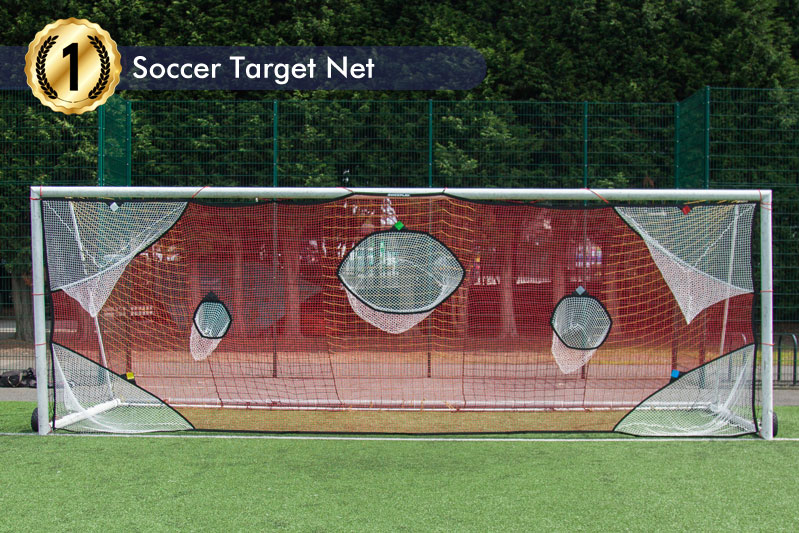
The Quickplay Pro Target Net continues to hold its position as the best overall soccer target net. With its exceptional build quality and compatibility with solid frame goals, this net is a top choice for serious players seeking ultimate performance. It provides precise construction and durability, making it an ideal training companion for professionals and dedicated enthusiasts looking to elevate their shooting skills.
Available from:
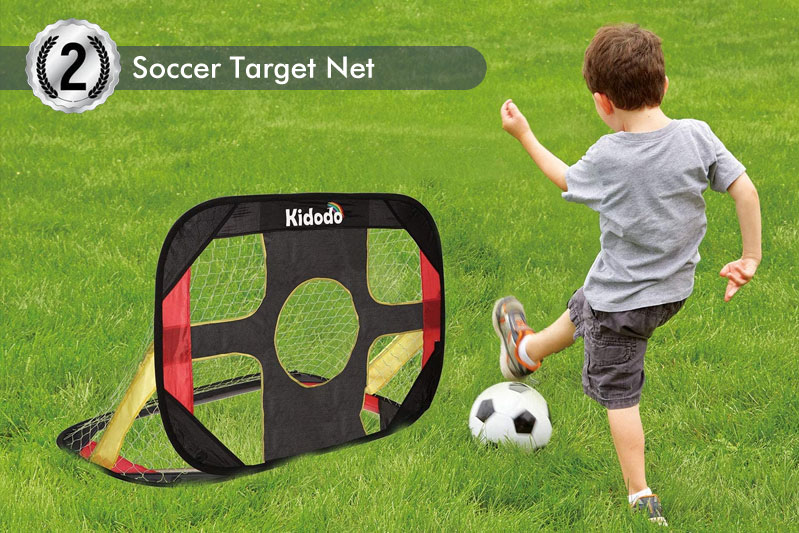
For those seeking a budget-friendly option without compromising functionality, the Kidodo Target Soccer Goal is a standout choice. This goal offers a sturdy construction at an affordable price, making it accessible to recreational players and those on a tight budget. With its integrated target zones, players can improve their accuracy and precision without breaking the bank.
Available from:
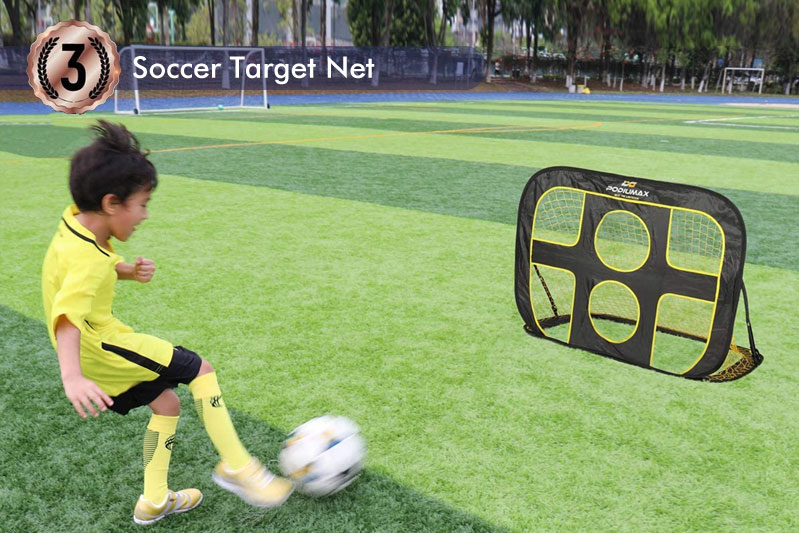
Designed specifically for young soccer enthusiasts, the PodiuMax 2 in 1 Pop Up Kids Soccer Goal is perfect for improving passing and shooting accuracy. Its indoor/outdoor versatility allows children to practice their skills in various settings. The goal’s compact size, easy setup, and integrated target net make it an excellent choice for kids to have fun while developing their soccer abilities.
Available from:
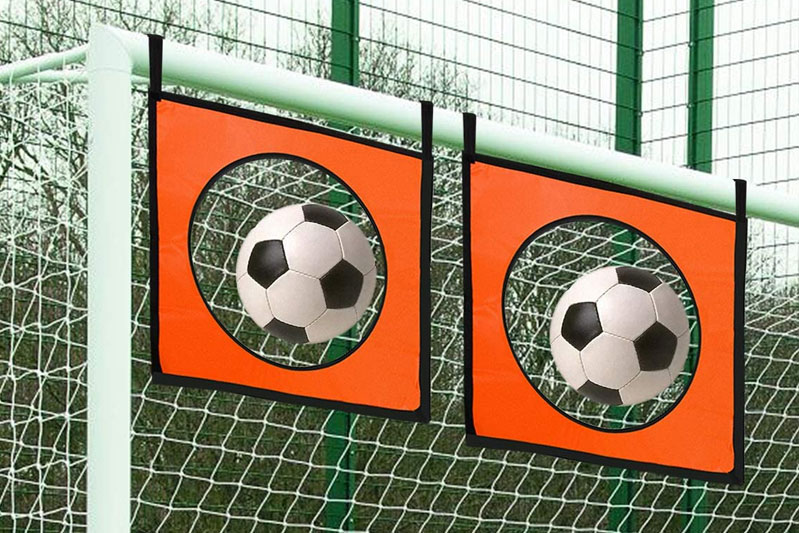
The Trademark Innovations 23.5″ Square Soccer Goal Square Target Set of 2 stands out for its versatility. These square targets can be easily attached to any goal frame, transforming a regular goal into a precision training tool. With adjustable straps, players can customize the target positions and work on various aspects of their shooting and passing skills. The set of two targets offers versatility and flexibility for players of all ages and skill levels.
Available from:
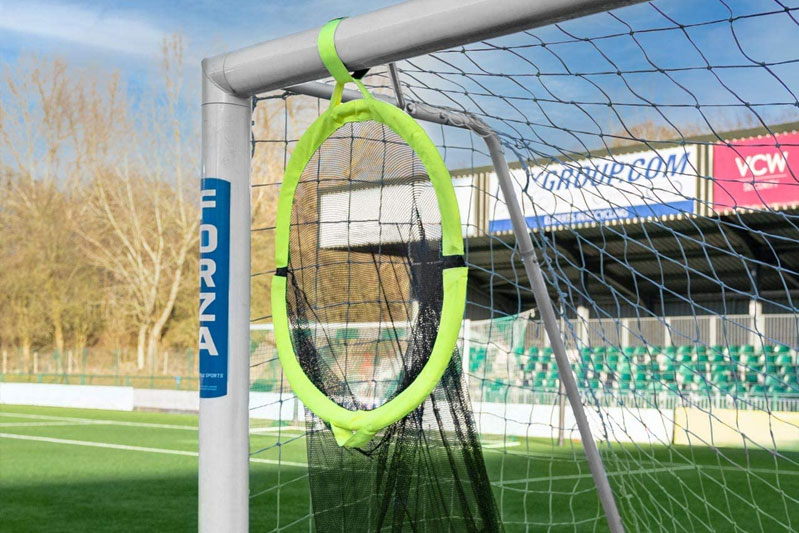
The FORZA Target Net + Ball Bag brings innovation to the soccer target net market. This 2-in-1 design not only serves as a target net but also doubles as a ball bag for convenient storage and transport. The net features different target zones, allowing players to focus on specific areas while training. With its innovative design and functionality, this target net offers a unique and practical solution for soccer players.
Available from:
Key Features to Look for in a Target Net:
Conclusion:
Investing in a soccer target net can greatly enhance your shooting skills, precision, and overall performance on the field. The Quickplay Pro Target Net remains the top choice for its exceptional quality, while the Kidodo Target Soccer Goal provides a budget-friendly option without compromising functionality. The PodiuMax